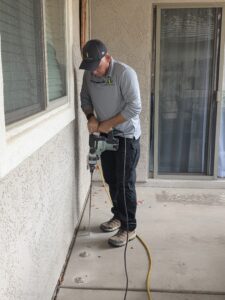
By Harry, Owner of Ozone Pest Control
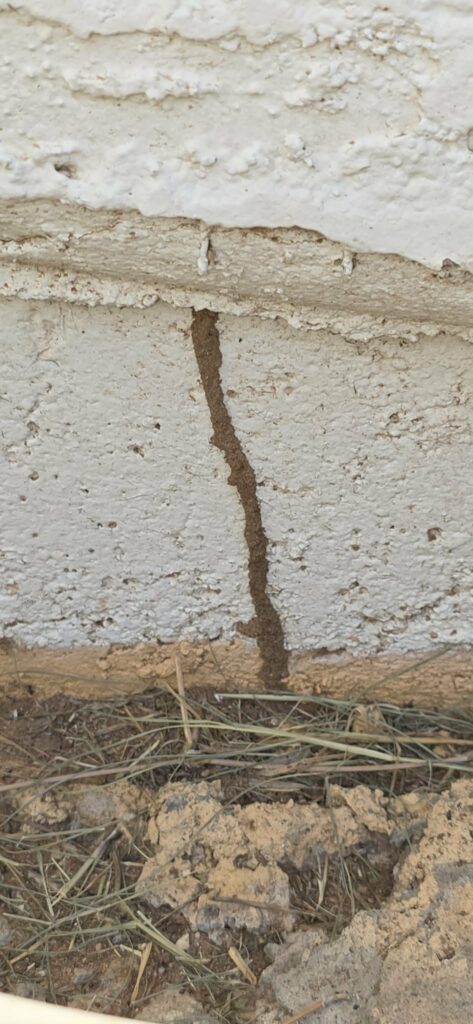
If you’ve found a thin trail of dirt climbing your garage wall or foundation, you may have found a termite shelter tube. Here’s what they are, why termites build them, and what to do if you spot one.
Watch the video: subterranean termite shelter tubes up close.
What these tubes are made of
Subterranean termites build shelter tubes, sometimes called mud tubes, out of soil, wood particles, and their own saliva. Termites need moisture to survive and are vulnerable to drying out in open air, so the tube locks in that moisture and protects them from predators as they travel between the soil and the wood in your home.
Not every tube looks the same
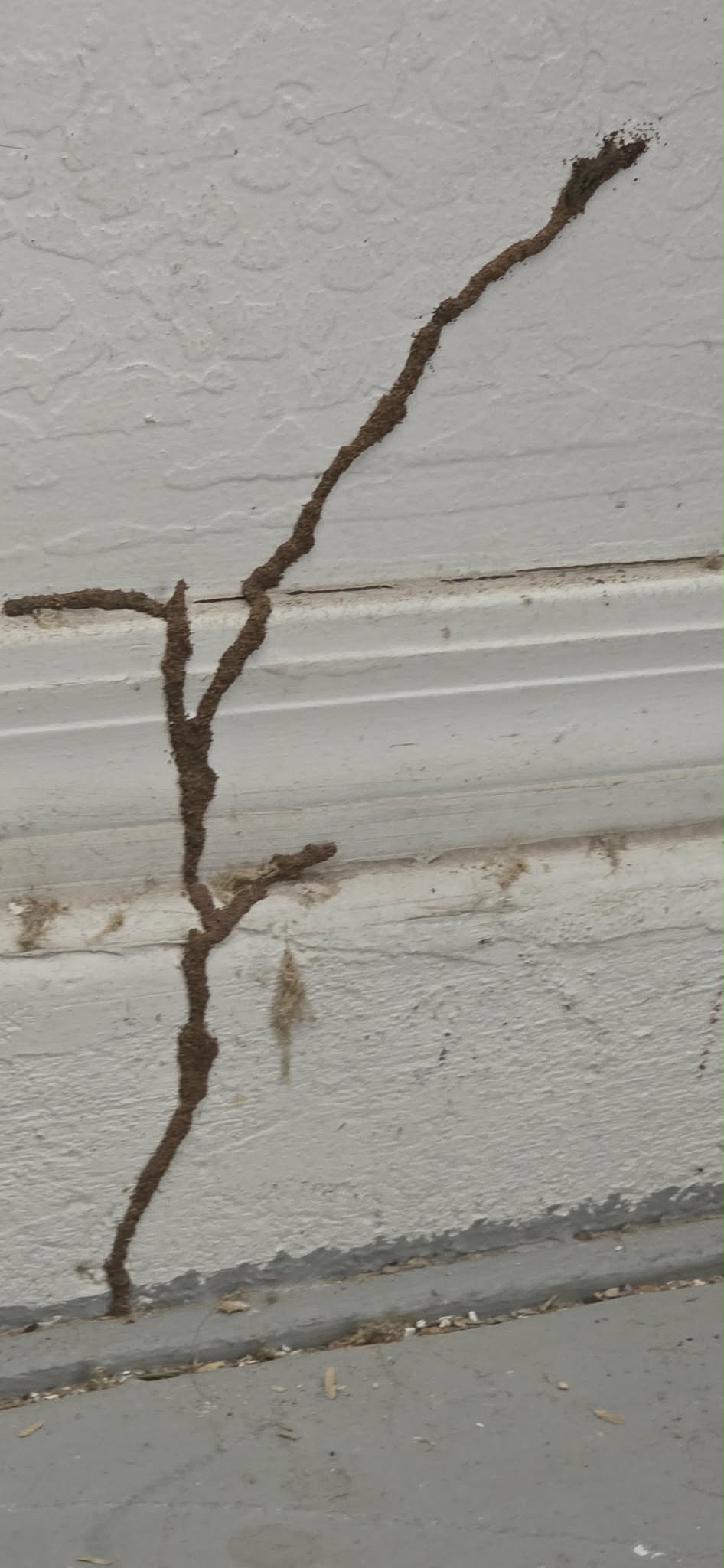
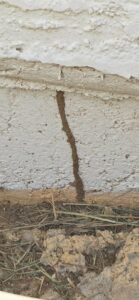
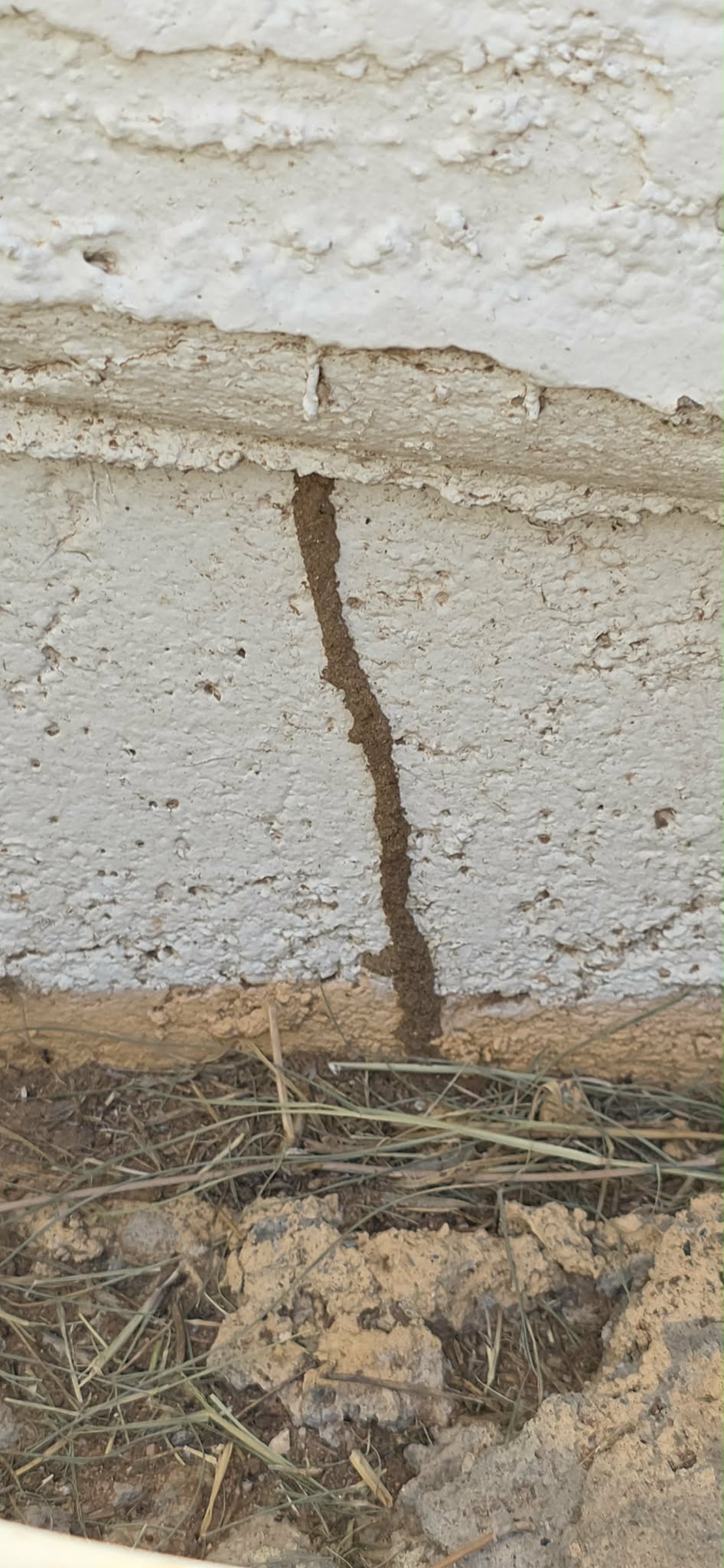
This thin, branching tube on a garage wall is what’s called an exploratory tube: a trial tunnel termites build while testing a new path to wood. Many exploratory tubes go nowhere and get abandoned. If one reaches wood, termites reinforce and widen it into a working tube, the main highway between the colony and your home.
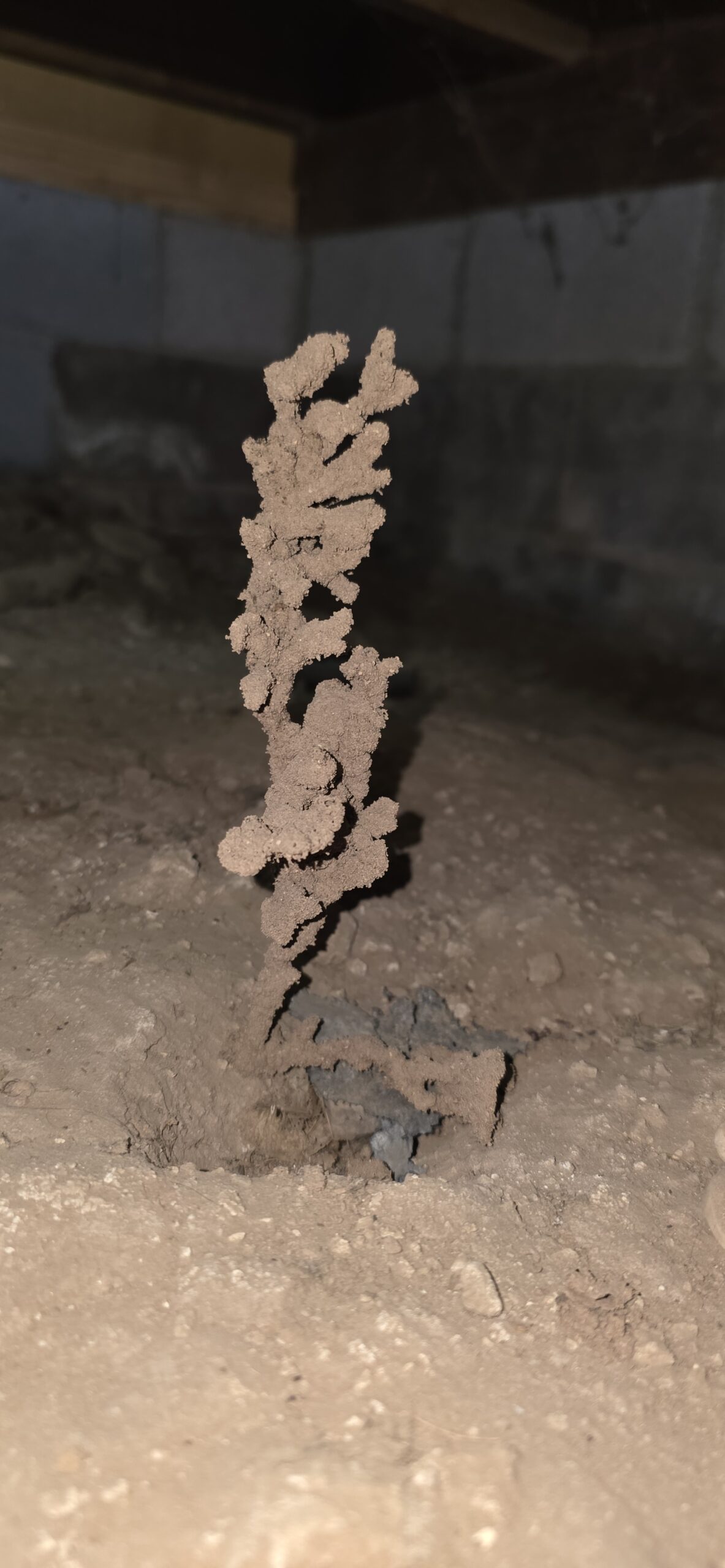
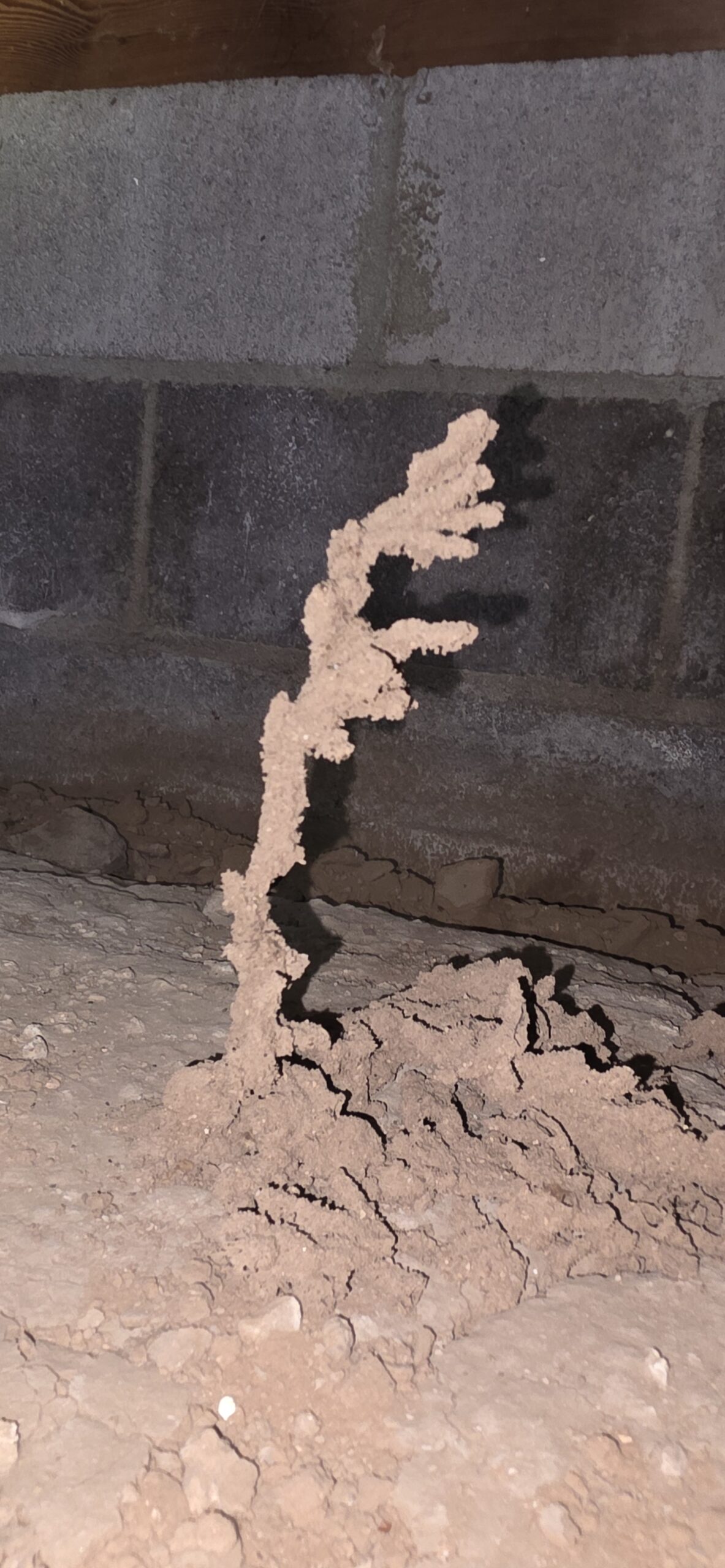
These two were built up from the floor of a crawl space, with nothing but the tube itself holding its shape. Termites will build a shelter tube almost anywhere they need to cross open air to reach wood.
Termites in Arizona: not if, but when
Subterranean termites are active year-round here in Arizona. But once our summer monsoon rains soak the ground, activity really picks up, and we see major surges from October through February. The National Pest Management Association estimates termites cause about $6.8 billion in property damage each year in the U.S., and standard homeowners insurance almost always excludes it.
A simple test
If you find a tube like these, break off a small piece. If it’s rebuilt within a few days, you have an active colony nearby, and it’s time to call a professional.
What to Expect During Your Free Termite Inspection
When it comes to termites, knowing what you’re dealing with is the first step toward protecting your Arizona home. At Ozone Pest Control, we make the inspection process simple, thorough, and completely transparent. That’s why we begin every termite quote with a complimentary inspection of your home, inside and out.
We Start with the Exterior
When your Ozone Pest Control inspector arrives, we’ll begin by carefully inspecting the outside of your home. We take measurements of the exterior walls and use those measurements to create a detailed diagram of your home.
As we inspect the property, we document our findings directly on the diagram. This can include signs of termite activity, areas of concern, conditions that may make your home more susceptible to termites, and other observations that are important when determining the appropriate treatment.
Then We Inspect the Inside
After completing the exterior inspection, we’ll move inside the home. Your inspector will look for signs of termite activity and other conditions that may be relevant to your home’s termite protection.
Just like the exterior inspection, any findings inside the home are documented on the diagram. This gives us a complete picture of the areas we need to consider when developing our treatment recommendations.
Your Free Termite Quote
Once the inspection is complete, your inspector will use all of the information gathered during the inspection to put together your free termite quote.
Your quote will show you what we found, where we found it, and exactly how we recommend treating your home. We believe you should have a clear understanding of the situation before deciding how you want to proceed.
At Ozone Pest Control, our goal is to take the guesswork out of termite protection. We want Arizona homeowners to know exactly what our inspectors found and why we’re recommending a particular treatment.
A thorough inspection leads to a better understanding of your home, and a termite treatment plan designed specifically for your property.
We serve San Tan Valley, Queen Creek, Gilbert, Chandler, and communities across the East Valley. Call (480) 677-8961, text 480-682-8004, or request a free quote. Learn more about our termite control service.
Sources: Orkin’s guide to termite mud tubes and the University of Utah Extension’s subterranean termite fact sheet.